Assistant Professor in Residence, School of Computing
| lina.kloub@uconn.edu | |
| Phone | (860) 486-0543 |
| Mailing Address | University of Connecticut 371 Fairfield Way, Unit 4155 Storrs, CT 06269-4155 |
| Office | Information Technology Engineering building (ITE) room 302 |
Brief Bio
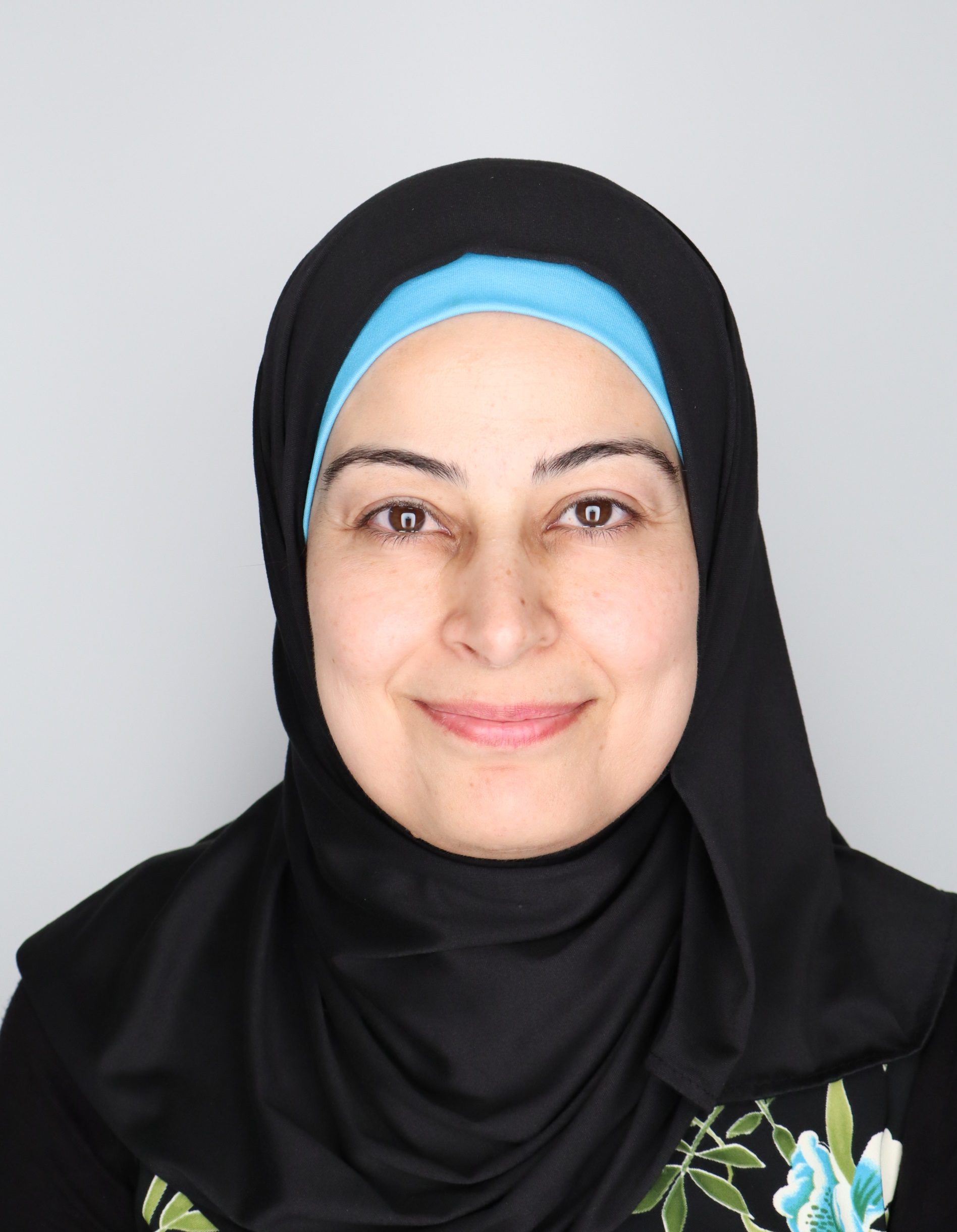
Lina Kloub is an Assistant Professor in Residence in the School of Computing at the University of Connecticut and a Neuroinclusive Engineering Teaching Fellow. She earned her Ph.D. in Computer Science and Engineering from UConn in 2021. Dr. Kloub is a Faculty Affiliate in AI at the Center for Excellence in Teaching and Learning (CETL), where she supports faculty across disciplines in integrating AI responsibly into their courses.
Dr. Kloub is deeply committed to inclusive teaching practices that foster belonging, accessibility, and student success. Her teaching and mentoring philosophy centers on creating collaborative and supportive environments where students can develop both technical expertise and essential career readiness skills. She has been recognized with
Her teaching and mentoring philosophy centers on creating inclusive, collaborative, and supportive learning environments where students can thrive both academically and professionally. She has been recognized with the 2025 AAUP Teaching Excellence: Early Career Award and the Belonging and Advocacy Educator Award from the Vergnano Institute for Impact, reflecting her dedication to innovation in engineering education.
In addition to her teaching and research activities, Dr. Lina Kloub serves as:
-
Neuroinclusive Engineering Teaching Fellow, UConn School of Engineering
- Career fellow and Champion, Center for Career Readiness and Life Skills
-
Faculty Affiliate for AI, UConn Center for Excellence in Teaching and Learning (CETL)
-
Faculty Mentor, NSF S-STEM Scholarship Program
- Artificial Intelligence in Education
- Responsible and Ethical AI
- AI Literacy and Human-AI Interaction
- Computing and Engineering Education
- Neuroinclusive Teaching and Learning
- Accessibility and Neurodiversity in Higher Education
- Career Readiness and Workforce Development
- Student Success and Belonging in STEM
- Educational Technology and Learning Analytics
- Undergraduate Research and Mentoring
- User Experience and AI-Driven Interfaces
- K–12 AI Education and Policy
- Computational Biology and Bioinformatics
- Genomic Data Analysis and Visualization
- Honor thesis supervisor: work with honor students and serve as a scholarly guide throughout the development, implementation, and conclusion of their honor thesis project.
- Technical Debt Amplified by AI: Real-World Case Studies and Strategies for Mitigation. Student Alejandro Reilly
- Evaluating the Effects of AI-Driven Interfaces on User Experience. Student Samuel Chichester
Research advisor: Supervised undergraduate research projects, fostering publication and career development opportunities.
- Mapping the Gap: A Content Analysis of AI-Enabled Accessibility for Neurodivergent Students in Connecticut Higher Education. Students Sophia Gomez Reynoso & Troy Murphy.
- AI in Connecticut Schools: A Review of Policies and Teacher Support in K-12 School Districts. High school student Ali Alshugran.
- Husky Lecture Log: AI tool that can analyze a video and provide transcripts with specifically curated content, answer questions about confusing topics, and provide questions to help build a strong understanding of materials. Students Karina Jadia, Priya Jeyaprakash, Faiyhaa-Sydra Saulat, Xinyi Li, and Neev Vachhani.
-
Exploring and Improving Genomic Data Analysis Tools. Analyze HoMer software, a computational biology tool for studying horizontal multi-gene transfer, and develop improved visualizations to enhance the interpretation of genomic data while gaining experience in bioinformatics and data analysis. Students Evan Gordon & Tyler Wang.
- ChatGPT in Computer Science Education: Exploring Benefits, Challenges, and Ethical Considerations. Student Aayush Gupta.
- AI tools in the Spotlight: Addressing Educators' Concerns and Building Trust. Student Vraj Patel.
- Enhancing Career Readiness Skills for Engineering Students with Artificial Intelligence. Students Christina Smith & Faiyhaa-Sydra Saulat.
Algorithms and Complexity (CSE 3500): Redesigned using inclusive teaching standards and project-based learning. The course emphasizes understanding algorithm design paradigms (divide-and-conquer, greedy, dynamic programming, randomized algorithms), and computational complexity. Students work in teams on research-driven projects to practice communication, teamwork, and career readiness competencies.
Data Structures and Object-Oriented Design (CSE 2050): Focuses on core data structures and object-oriented programming principles in Python. Students engage in collaborative coding labs and weekly assignments that reinforce concepts in both algorithmic efficiency and software design. The course emphasizes problem-solving, debugging, and peer collaboration.
Software Engineering (CSE 2102): Covers the fundamentals of software engineering, including requirements analysis, design patterns, testing, and documentation. Students learn modern development practices such as Agile methodology, Git/GitHub, and CI/CD concepts. A semester-long team project simulates real-world development, giving students hands-on experience with collaboration, project management, and stakeholder communication.
Independent Study (CSE 4099): Supervises student-driven projects in computer science, engineering education, and artificial intelligence. Students engage in research, software development, literature review, and scholarly dissemination while developing skills in critical thinking, project management, communication, and professional practice. Many projects serve as pathways to undergraduate research presentations, honors work, and conference participation.
A. Reilly, L. Kloub - "Technical Debt Amplified by AI: Real-World Case Studies and Strategies for Mitigation" - 2026 ASEE-NE Conference
T. Alshugran, L. Kloub - "Automated Enforcement of Regulatory Privacy Policies in AI-Enabled Systems Using Formal Access Control Models" 2026 ASEE-NE Conference
A. Alshugran, L. Kloub “AI in Connecticut Schools: A Review of Policies and Teacher Support in K-12 School Districts” 3rd place poster - High school poster level – ASEE-NE 2026
Kloub, V. Patel, T. Heuy – Best paper award "AI tools in the Spotlight: Addressing Educators' Concerns and Building Trust" 2025 ASEE-NE Conference
Kloub – "Empowering Students with AI: A Universal Design Framework for Learning and Growth" 2025 ASEE-NE Conference
Kloub, C. Smith, F. Saulat "Enhancing Career Readiness Skills for Engineering Students with Artificial Intelligence" 2025 ASEE-NE Conference
Alshugran, L. Kloub "Preserving Student Privacy While Leveraging Generative AI in Higher Education" 2025 ASEE-NE Conference
Kloub, A. Gupta – "ChatGPT in Computer Science Education: Exploring Benefits, Challenges, and Ethical Considerations" ASEE 2024.
Kloub, S. Gosselin, J. Graf, J. P. Gogarten, M. S. Bansal – "Investigating Additive and Replacing Horizontal Gene Transfers Using Phylogenies and Whole Genomes " Genome Biology and Evolution, 16(9), evae180, 2024.
Kloub – "Engaging Minds, Elevating Performance: The Transformative Power of Interactive Review Sessions in Computer Science Courses," ASEE 2024.
Kloub, S. Gosselin, M. Fullmer, J. Graf, J. P. Gogarten, M. S. Bansal – "Systematic Detection of Large-Scale Multigene Horizontal Transfer in Prokaryotes" Molecular Biology and Evolution, 38(6): 2639–2659, 2021
S. Yoo, L. Kloub – "Mobile Web Application with Shortest Path Finder: Traveler’s Sidekick," IEEE SAI Computing Conference, 2016.
April 2026 - Undergraduate researchers Sophia Gomez Reynoso and Troy Murphy, presented “Mapping the Gap: A Content Analysis of AI-Enabled Accessibility for Neurodivergent Students in Connecticut Higher Education” at the 29th Annual Frontiers in Undergraduate Research Poster Exhibition.
Samuel Chichester, an undergraduate researcher, presented “Teaching AI Interface Literacy in Computing Education Through Comparative Case Studies” at UConn’s 29th Annual Frontiers in Undergraduate Research Poster Exhibition.
March 2026 - Congratulations to Ali Alshugran, a high school student researcher, whose poster, “AI in Connecticut Schools: A Review of Policies and Teacher Support in K–12 School Districts,” earned 3rd Place in the High School Poster Competition at the 2026 ASEE Northeast Section Conference.
May 2026 - I was honored to receive the 2026 Distinguished Engineering Educator Award, presented by the UConn College of Engineering in recognition of excellence in undergraduate teaching and educational innovation.
February 2026 - Congratulations to undergraduate researcher Alejandro Reilly, whose paper, “Technical Debt Amplified by AI: Real-World Case Studies and Strategies for Mitigation,” was accepted for presentation at the 2026 ASEE Northeast Section Conference.
October 2025 - Undergraduate researcher Alejandro Reilly, presented his research project, “Technical Debt Amplified by AI: Real-World Case Studies and Strategies for Mitigation,” at UConn’s 13th Annual Fall Frontiers Poster Exhibition.
May 2025 - I was honored to receive the 2025 Belonging and Advocacy Educator Award from the Vergnano Institute for Impact (VII) in recognition of my efforts to create inclusive learning environments, support student belonging, and promote equity and advocacy within the University of Connecticut community.
April 2025 - I was honored to receive the 2025 AAUP Teaching Excellence: Early Career Award, a university-wide recognition that celebrates outstanding teaching, innovation, and commitment to student success among early-career faculty at the University of Connecticut.
March 2025 - Congratulations to Vraj Patel, an undergraduate researcher, received the Best Paper Award at the 2025 ASEE Northeast Section Conference for his paper, “AI Tools in the Spotlight: Addressing Educators’ Concerns and Building Trust.”
Fall 2024 - I was featured by the UConn Center for Career Readiness and Life Skills for my work promoting career readiness in computing education through the integration of NACE competencies, professional skills, and AI-supported learning experiences. Full article Career Champion spotlight
Spring 2023 - present: Organizer of The Algorithm of Crafting, a weekly workshop that blends art, mindfulness, and community-building. Held at the BEACH room, these sessions provide undergraduate students with a supportive space to reduce stress and foster connection. (Time for this semester will be announced soon.)
Undergraduate Researchers
Honors Thesis Supervision:
- Alejandro Reilly (Fall 2025)
- Samuel Chichester (Spring 2026)
Undergraduate Research Mentorship:
Spring 2026
- Sophia Gomez Reynoso
- Troy Murphy
- Ali Alshugran (high school student)
Fall 2025
- Karina Jadia
- Priya Jeyaprakash
- Faiyhaa-Sydra Saulat
- Xinyi Li
- Neev Vachhani
Spring 2025
- Evan Gordon
- Tyler Wang
Fall 2024
- Vraj Patel
- Christina Smith
- Faiyhaa-Sydra Saulat
Fall 2023 - Spring 2024
- Aayush Gupta