Engineering Research At UConn
DISCOVERY, IMPACT, INNOVATION
Explore our faculty expertise across seven departments and 150+ research areas to find collaborators, advisors,
or specialists in emerging technologies.
OUR STRENGTHS
The University of Connecticut College of Engineering conducts nationally competitive research — advancing discovery, empowering industry partnerships, and solving critical global challenges in energy, health, infrastructure, AI, and defense.

$102M
in annual research expenditures

334
active sponsored awards across federal, industry, and foundation partners

3%
top 3% of U.S. research universities (Carnegie R1)

52
faculty ranked in the world’s top 2% scientists
NATIONAL PRIORITIES
The UConn College of Engineering research strengths span six interrelated domains aligned with national priorities:
ADVANCED MATERIALS & MANUFACTURING
BIOENGINEERING & HEALTH
SMART & RESILIENT INFRASTRUCTURE
AI, MACHINE LEARNING & QUANTUM TECHNOLOGIES
DEFENSE INNOVATION
ENERGY & SUSTAINABILITY
INDUSTRY NEEDS
The College of Engineering’s research enterprise is deeply integrated with industry workforce development and technology transfer.
250+ COMPANY COLLABORATIONS annually supporting sponsored research, senior design projects, internships, and workforce upskilling.
67% COE GRADUATES STAY IN CT, as a talent engine for the state’s advanced manufacturing, aerospace, energy, and biomedical sectors.
9 COE FACULTY ARE NATIONAL ACADEMY OF INVENTORS FELLOWS who have contributed a sustained impact in discovery, invention, and commercialization.
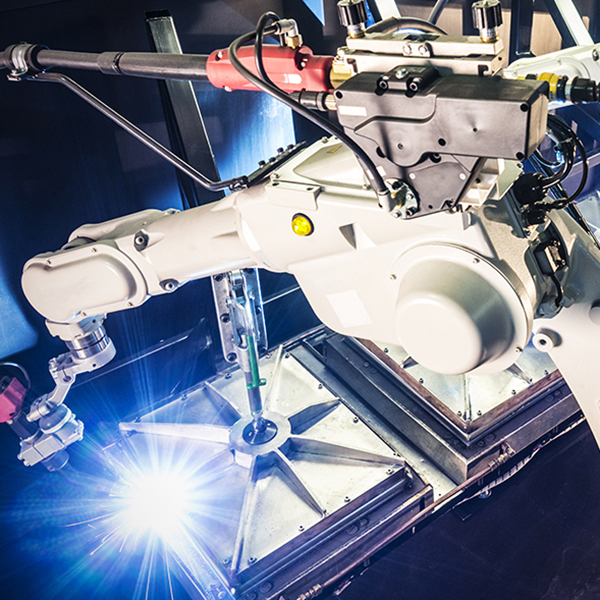
ADVANCED MATERIALS & MANUFACTURING
UConn engineers develop next‑generation materials and innovative manufacturing processes that enable stronger, lighter, and more resilient systems for industry and defense. Our work spans additive manufacturing of advanced alloys, smart materials for extreme environments, and digital‑twin‑enabled production systems. Partnerships with federal agencies and leading companies accelerate technology transition from lab to deployment.
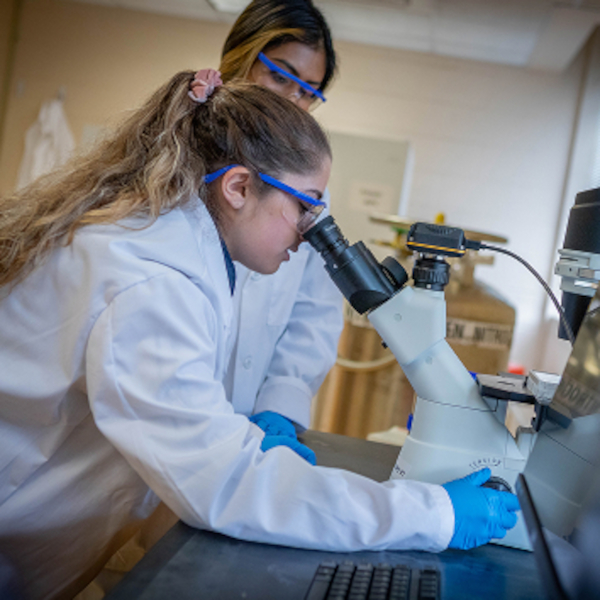
BIOENGINEERING &
HEALTH
Our researchers integrate engineering, biology, and medicine to create transformative health technologies—from smart biomaterials and tissue engineering to wearable diagnostics and neural interfaces. UConn faculty lead major federally and foundation‑funded initiatives to improve disease detection, drug delivery, and patient outcomes across diverse clinical domains.

SMART & RESILIENT
INFRASTRUCTURE
UConn advances the future of transportation, civil infrastructure, and community resilience through data‑driven engineering and novel materials. Faculty lead regional and national programs in transportation safety, structural health monitoring, climate resilience, and aging‑infrastructure mitigation, supporting federal, state, and industry partners in building safer and more sustainable systems.

AI, MACHINE LEARNING & QUANTUM TECHNOLOGIES
Across engineering disciplines, UConn applies advanced computation—from physics‑informed AI and multimodal health analytics to quantum materials and devices. Faculty collaborate with national partners to push the boundaries of intelligent decision systems, secure communications, and next‑generation computing architectures, positioning Connecticut as a growing hub for AI and quantum innovation.

DEFENSE
INNOVATION
With deep expertise in undersea systems, autonomous decision tools, secure manufacturing, and mission‑critical technologies, UConn is a strategic research partner for the U.S. Navy and Department of Defense. Our applied research ecosystem delivers rapid solutions, workforce pipelines, and technology transition pathways that strengthen national security and industrial competitiveness.
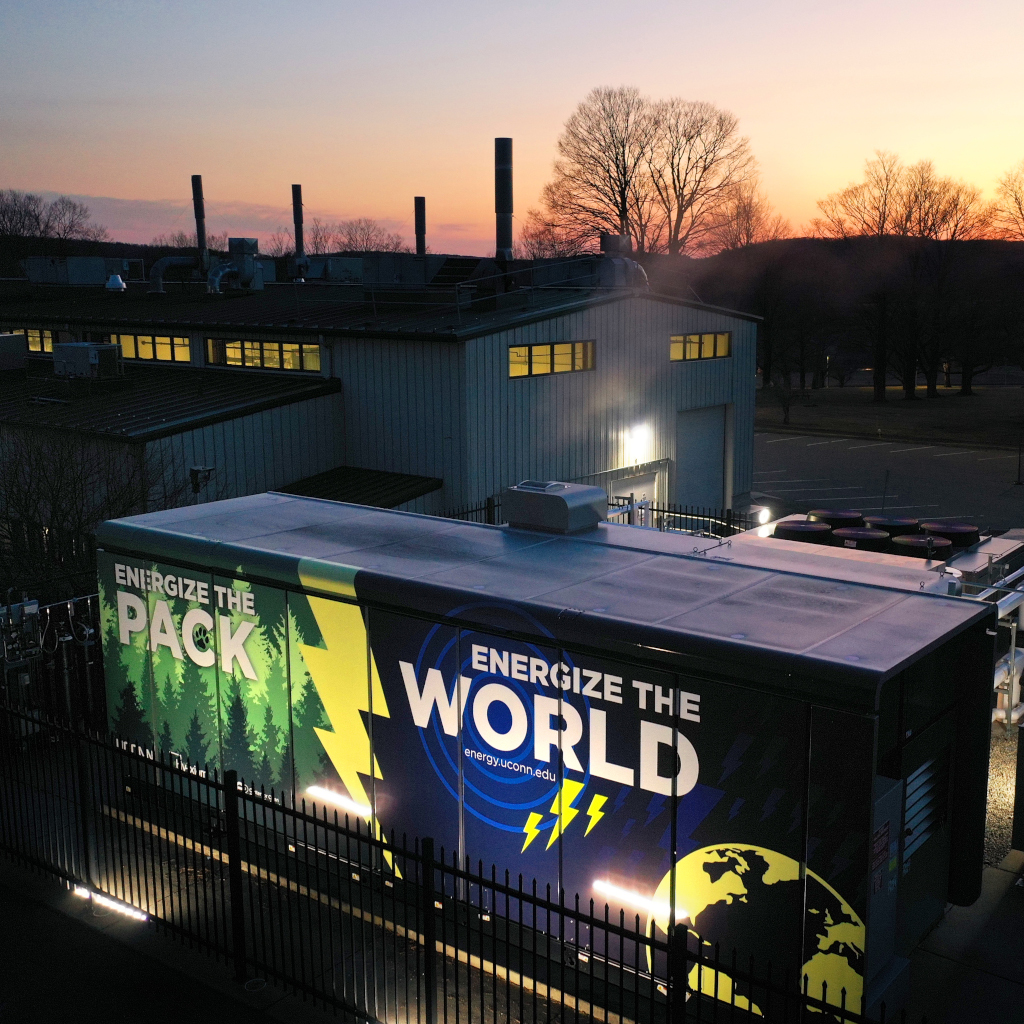
ENERGY &
SUSTAINABILITY
UConn engineers lead advances in clean energy, climate resilience, and sustainable resource systems. Work includes fuel cells, grid modernization, microplastic remediation, resilient energy systems, and low‑emission water and wastewater technologies. Collaborations with federal agencies and regional utilities help communities and industries transition to a more sustainable energy future.
CENTERS & INSTITUTES
The College of Engineering Research Centers & Institutes are mission-driven engines that catalyze interdisciplinary discovery, industry engagement, and translation. They convene faculty, students, and partners around problem-focused research in domains such as clean energy, cybersecurity, biomedical systems, advanced materials, and defense technologies.
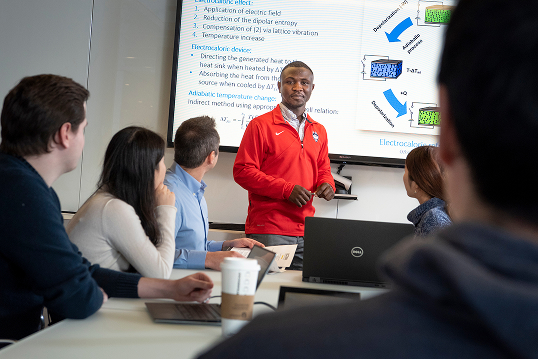
INNOVATION &
ENTREPRENEURSHIP
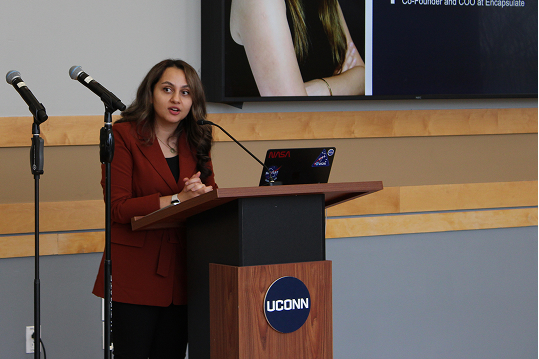
The College of Engineering fosters a dynamic innovation ecosystem that transforms research breakthroughs into real-world solutions. Through technology licensing, patenting support, and faculty-led startups, COE research catalyzes economic impact, supports Connecticut’s innovation landscape, and strengthens national competitiveness.
CONTACT US
Connect with us! Are there topic areas you want to explore? Is there a partnership you wish to begin with the College of Engineering? Do you want to start a collaboration with our faculty or students? Is there a story or impact highlight you wish to share with us?