Research
Innovation & Entrepreneurship
UConn Engineering has been highly successful in creating a culture of innovation and entrepreneurship that permeates our educational and research programs. These activities transform our faculty's and students' intellectual capital into drivers for economic growth through patents, technology licensing, and startup companies.
Our Strengths
Advanced Materials & Manufacturing
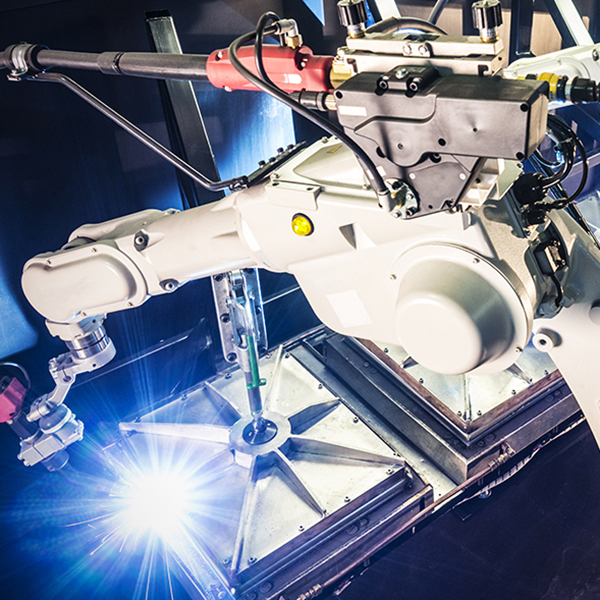
UConn engineers develop next‑generation materials and innovative manufacturing processes that enable stronger, lighter, and more resilient systems for industry and defense. Our work spans additive manufacturing of advanced alloys, smart materials for extreme environments, and digital‑twin‑enabled production systems. Partnerships with federal agencies and leading companies accelerate technology transition from lab to deployment.
Bioengineering & Health
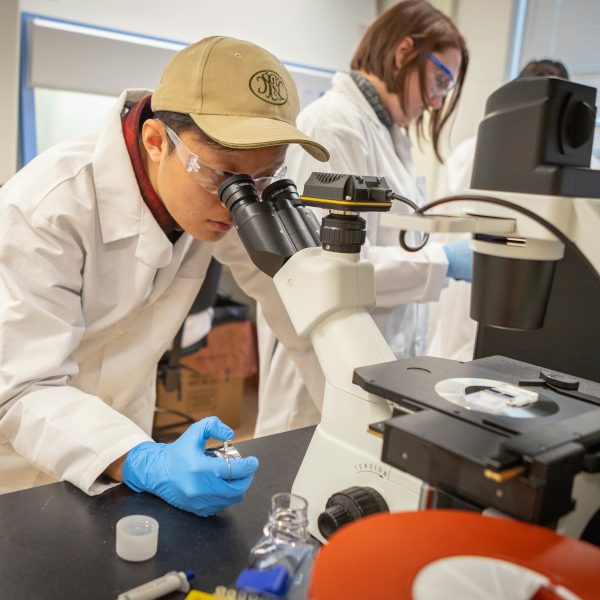
Our researchers integrate engineering, biology, and medicine to create transformative health technologies—from smart biomaterials and tissue engineering to wearable diagnostics and neural interfaces. UConn faculty lead major federally and foundation‑funded initiatives to improve disease detection, drug delivery, and patient outcomes across diverse clinical domains.
Smart & Resilient Infrastructure
UConn advances the future of transportation, civil infrastructure, and community resilience through data‑driven engineering and novel materials. Faculty lead regional and national programs in transportation safety, structural health monitoring, climate resilience, and aging‑infrastructure mitigation, supporting federal, state, and industry partners in building safer and more sustainable systems.
AI, Machine Learning & Quantum Technologies
Across engineering disciplines, UConn applies advanced computation—from physics‑informed AI and multimodal health analytics to quantum materials and devices. Faculty collaborate with national partners to push the boundaries of intelligent decision systems, secure communications, and next‑generation computing architectures, positioning Connecticut as a growing hub for AI and quantum innovation.
Defense Innovation
With deep expertise in undersea systems, autonomous decision tools, secure manufacturing, and mission‑critical technologies, UConn is a strategic research partner for the U.S. Navy and Department of Defense. Our applied research ecosystem delivers rapid solutions, workforce pipelines, and technology transition pathways that strengthen national security and industrial competitiveness.
Energy & Sustainability
UConn engineers lead advances in clean energy, climate resilience, and sustainable resource systems. Work includes fuel cells, grid modernization, microplastic remediation, resilient energy systems, and low‑emission water and wastewater technologies. Collaborations with federal agencies and regional utilities help communities and industries transition to a more sustainable energy future.
Centers & Institutes
Our centers and institutes are the engines of our outstanding research programs. The college supports over 20 centers covering a wide range of critical subjects, including energy systems, materials characterization, advanced manufacturing, cybersecurity, transportation systems, advanced systems engineering, and undersea vehicle technology.
Faculty Expertise Search
With over 150 faculty members in seven departments, our faculty’s expertise is likely to include anything that you are looking for. You can use this convenient search engine to find a UConn faculty expert in your area of interest.
Research
UConn is designated by the Carnegie Foundation as an "R1" research university. This is the highest classification given for research and a distinction held by only 3 percent of all U.S. institutions of higher education. UConn Engineering’s annual research expenditures exceed $75M per year with approximately 70 percent of the total coming from federal agencies, such as the National Science Foundation, the National Institutes of Health, the Department of Energy, and Department of Defense.